The Runaway Train is Accelerating: An Updated Look at Growth in B.C. Municipal Spending
Highlights
A prominent contributor to declining affordability in B.C. over the past decade or more has been exceptionally high property tax inflation. This is a direct consequence of runaway growth in municipal operating expenses, which are principally funded by property taxes.
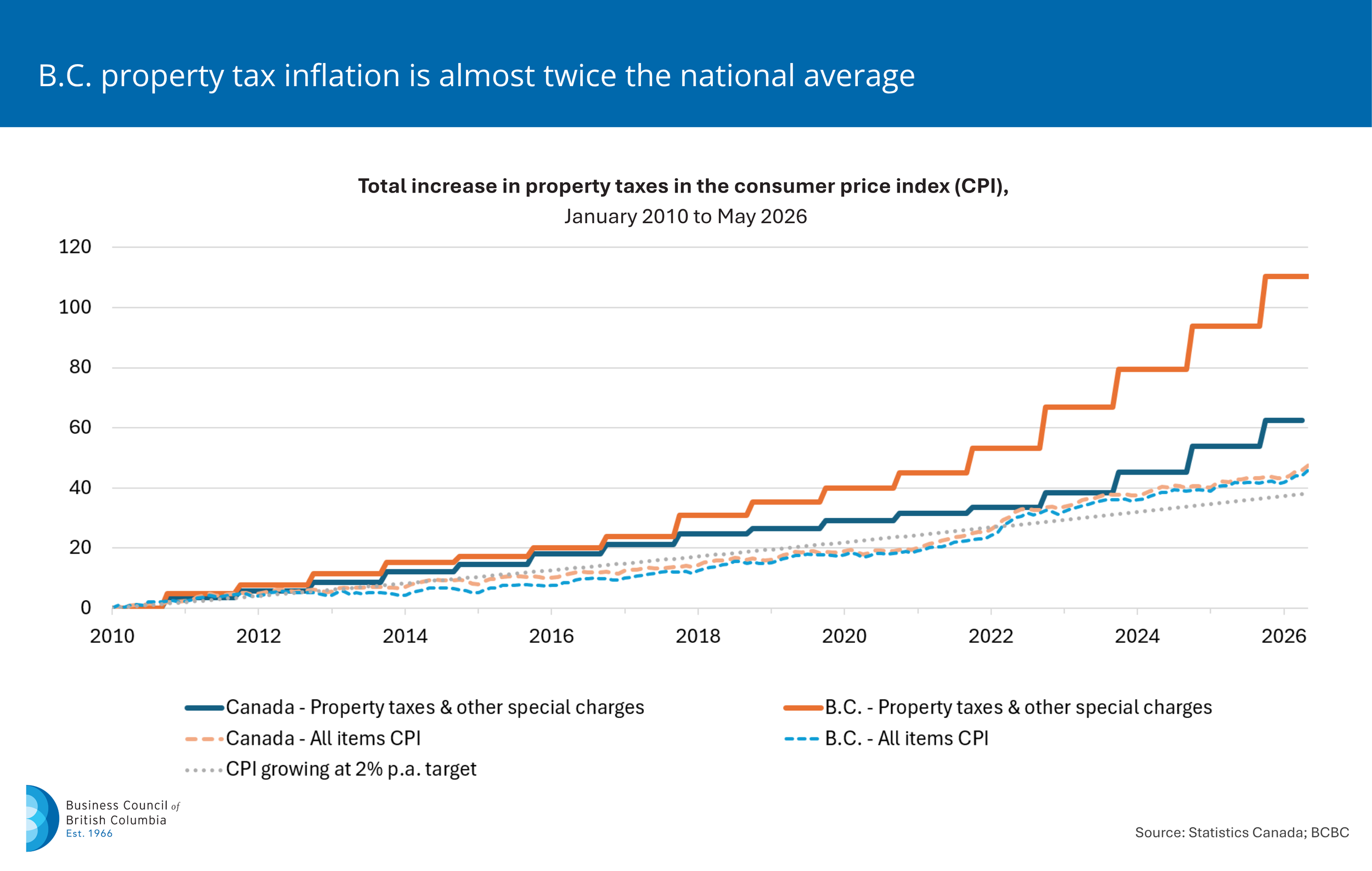
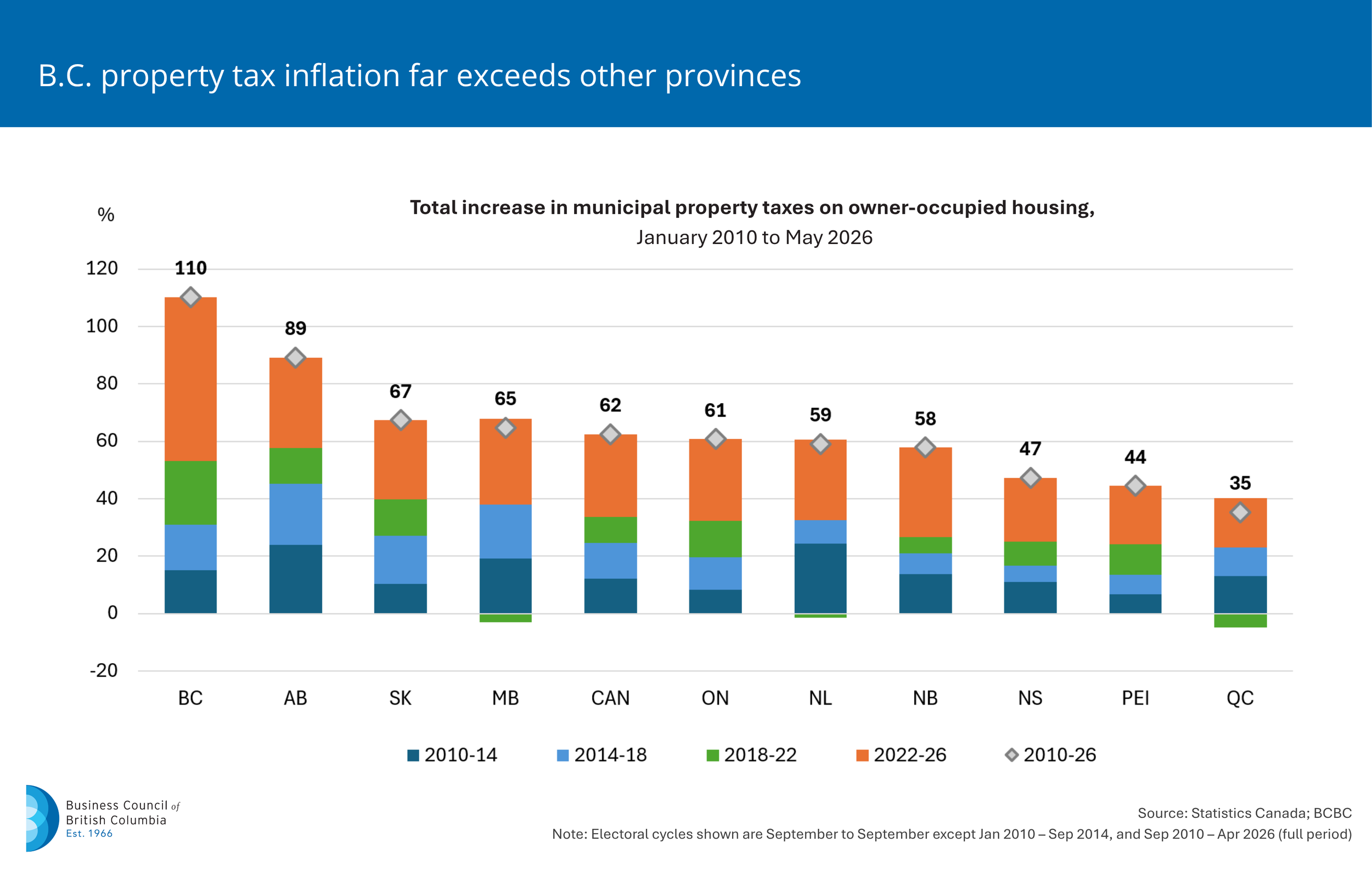
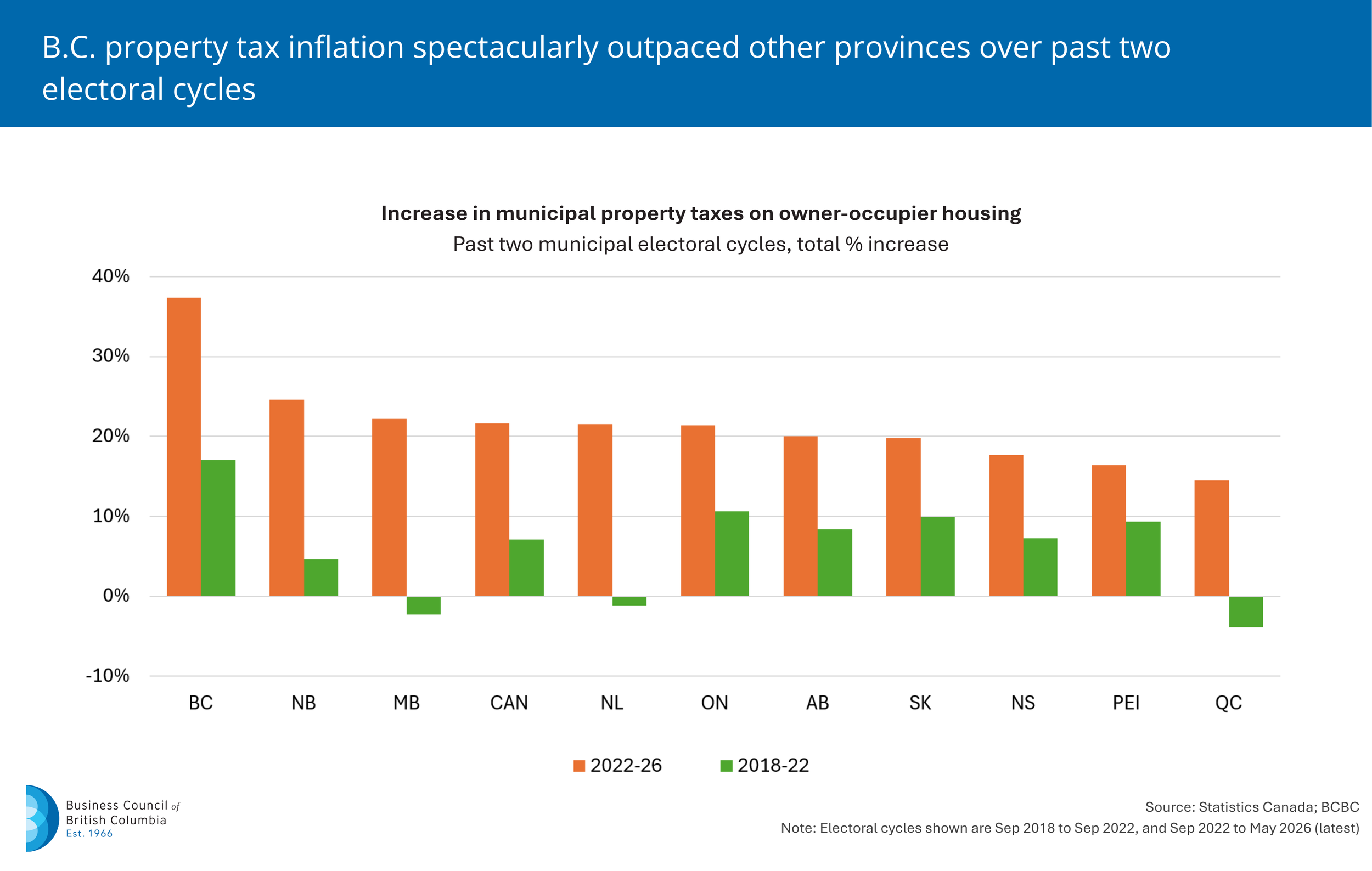
From 2010 to 2026, B.C. property taxes on owner-occupied housing rose by 110% – almost double the national rate (62%) and nearly two-and-a-half times B.C.'s overall CPI inflation rate of 46%. Property taxes have accelerated over the past two electoral cycles and far outpaced every other province.
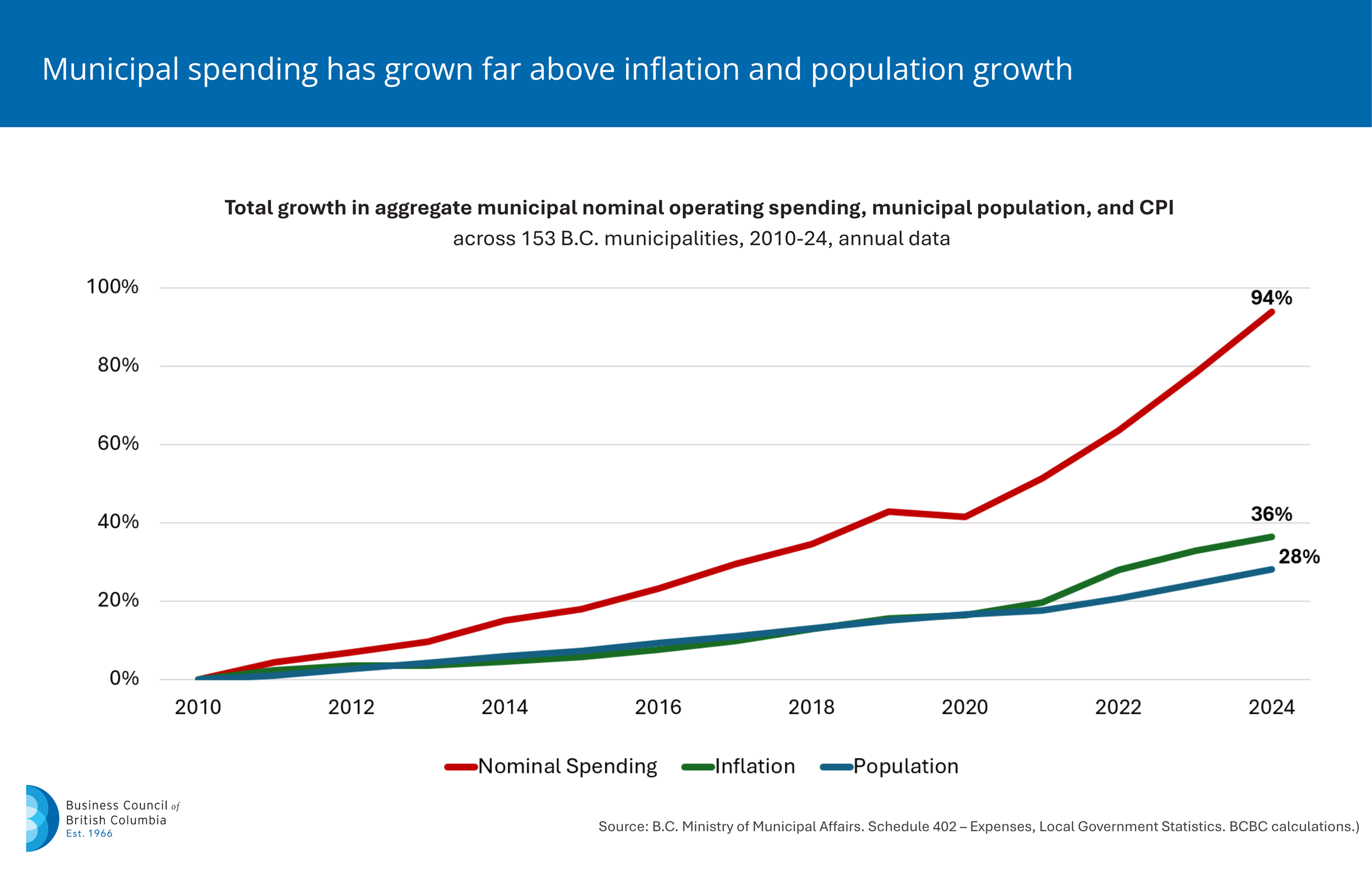
Our analysis of municipal operating spending data for 2010–24 shows that 135 out of 153 B.C. municipalities (88%) grew real (i.e., inflation-adjusted) spending faster than municipal population growth, often significantly so. Over half (55%) recorded a real spending growth to population growth gap equal to or greater than 1 percentage point annually.
Over 2010–24, “excess spending” (i.e., the amount municipalities spent beyond what would be expected if spending kept pace with municipal population growth and inflation) totalled approximately $6.5 billion (in real 2024 dollars), or $1,280 per capita.
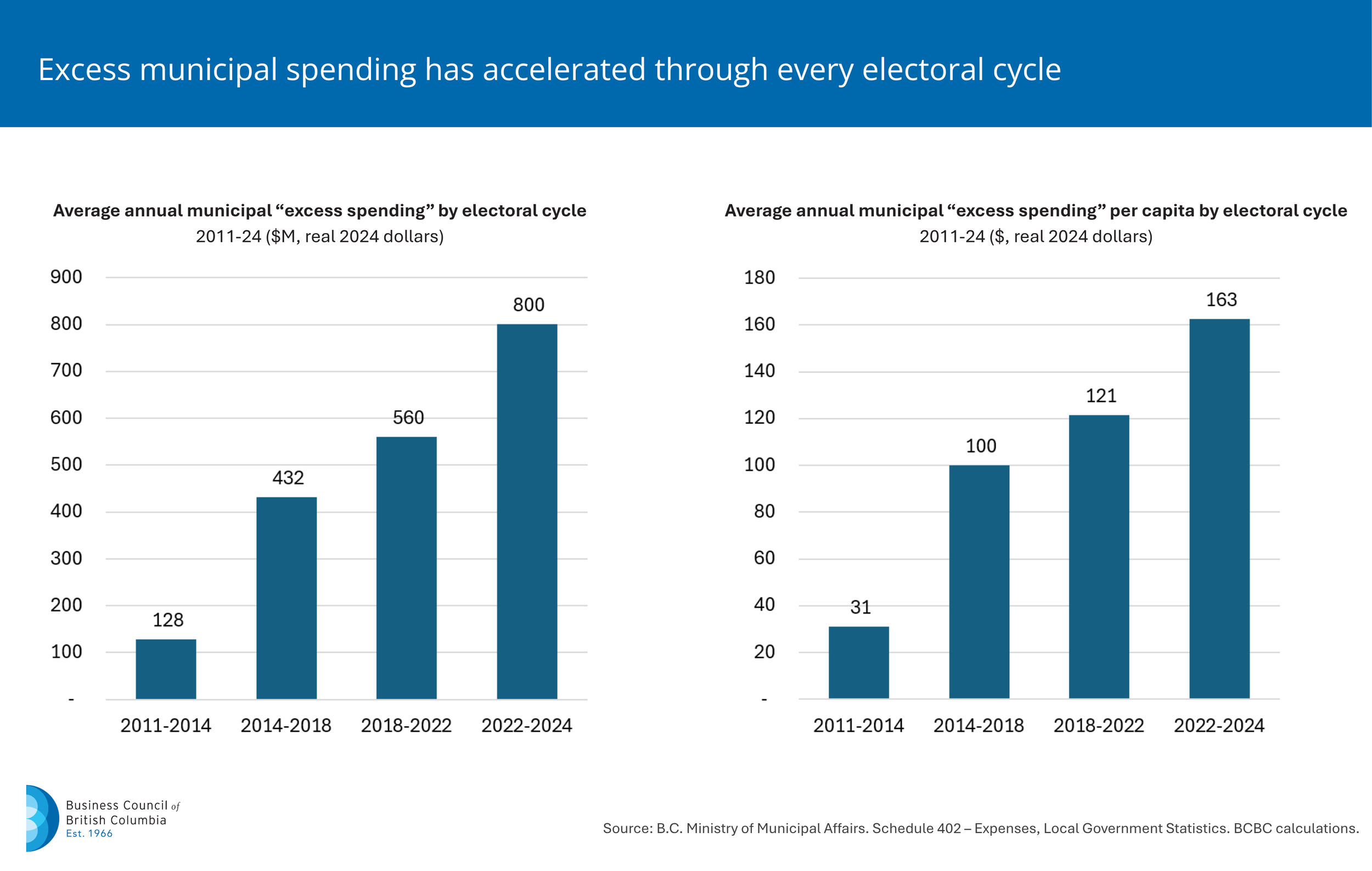
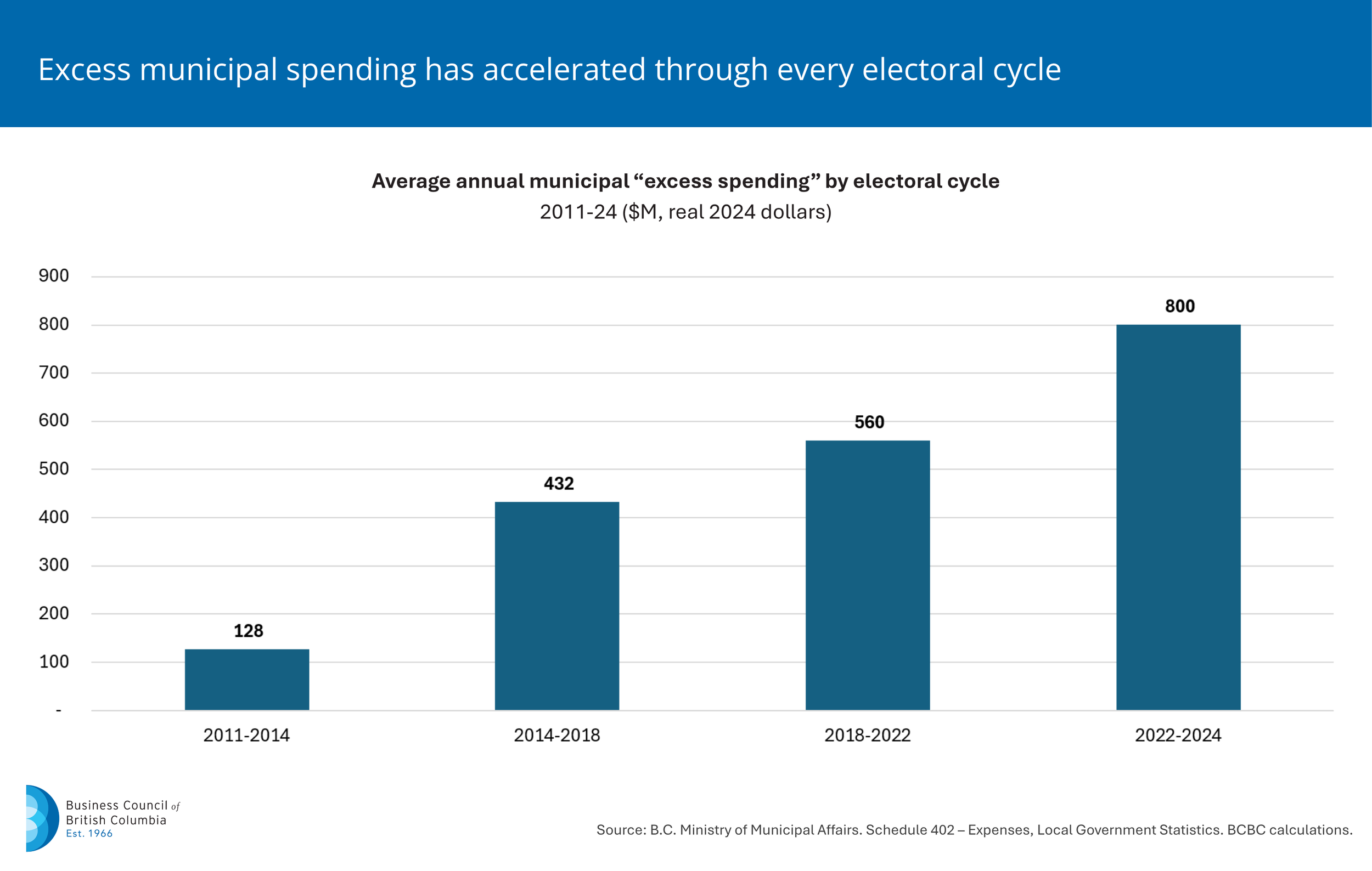
Excess spending is rising with each municipal electoral cycle, indicating the problem is getting worse not better. Average annual excess spending increased from $128 million ($31 per capita) in the 2011-14 cycle to $800 million ($163 per capita) in the current cycle to date (2022-24), more than six times the earlier period.
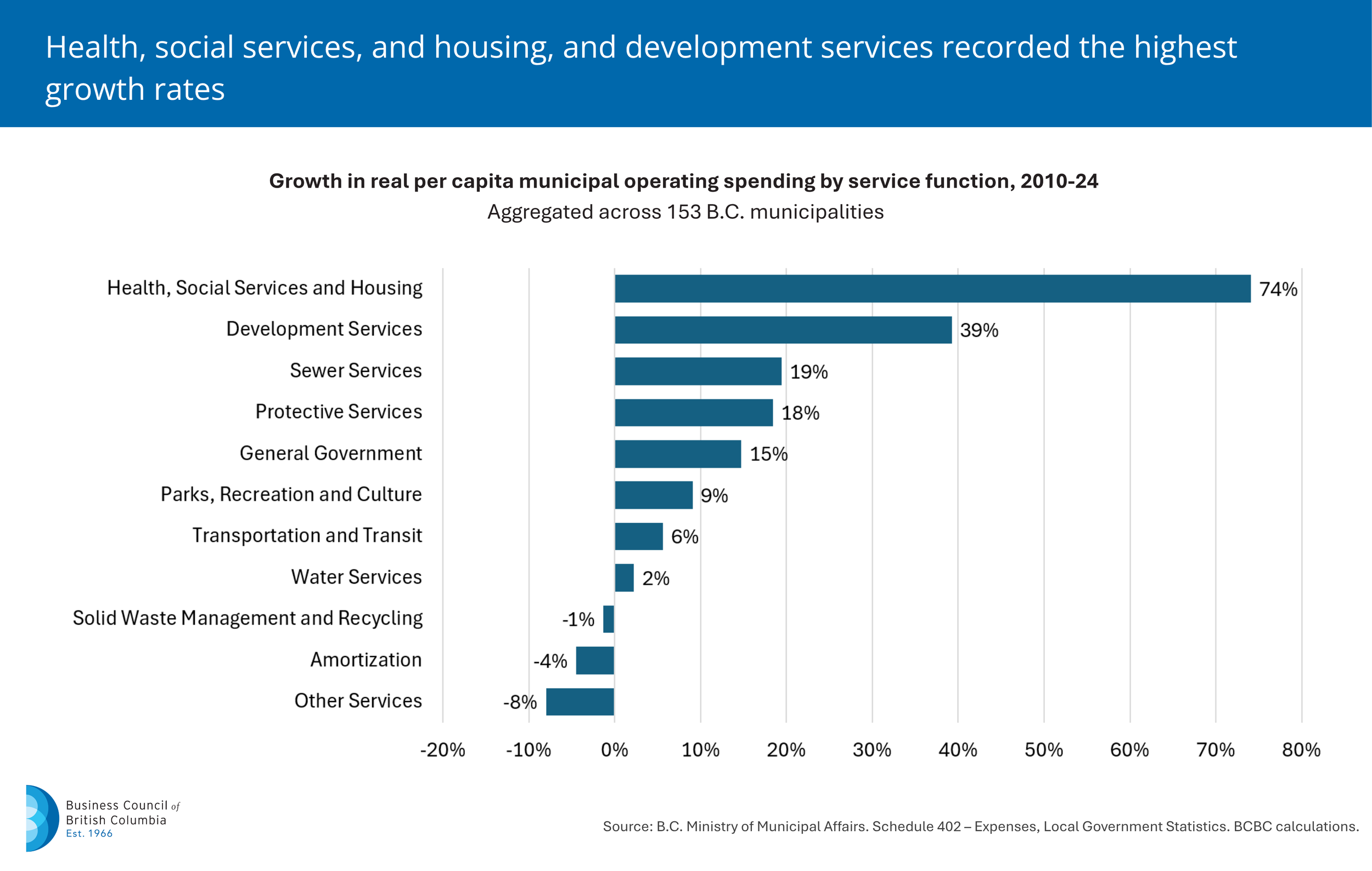
Health, social services and housing – areas of provincial responsibility – recorded the fastest growth in real per capita spending (74% over 2010–24). This raises questions about whether there has been an implicit downloading of responsibilities by the province, a decision by municipal leaders to broaden their mandate, or an inefficient duplication of activities between provincial and local governments.
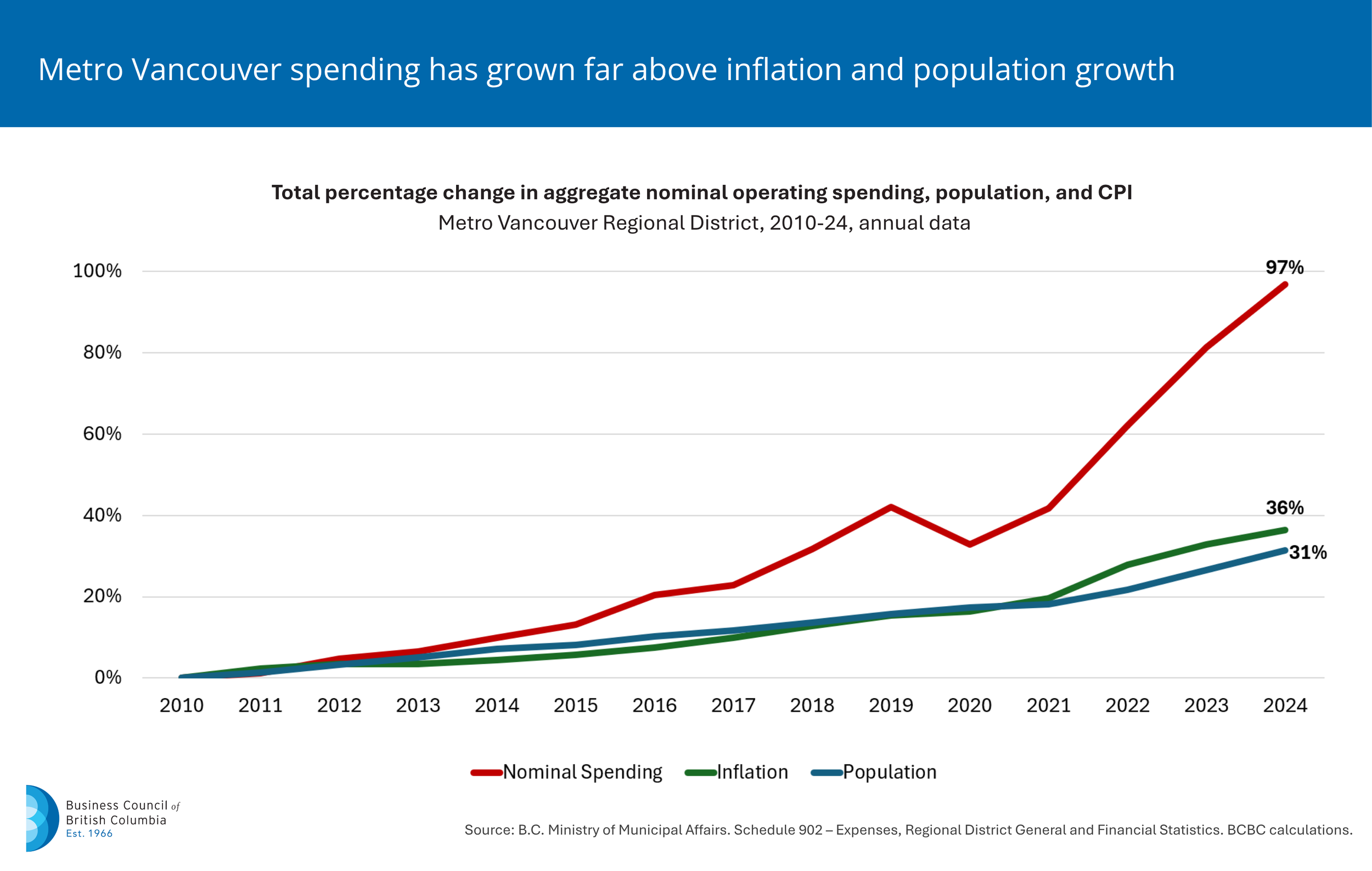
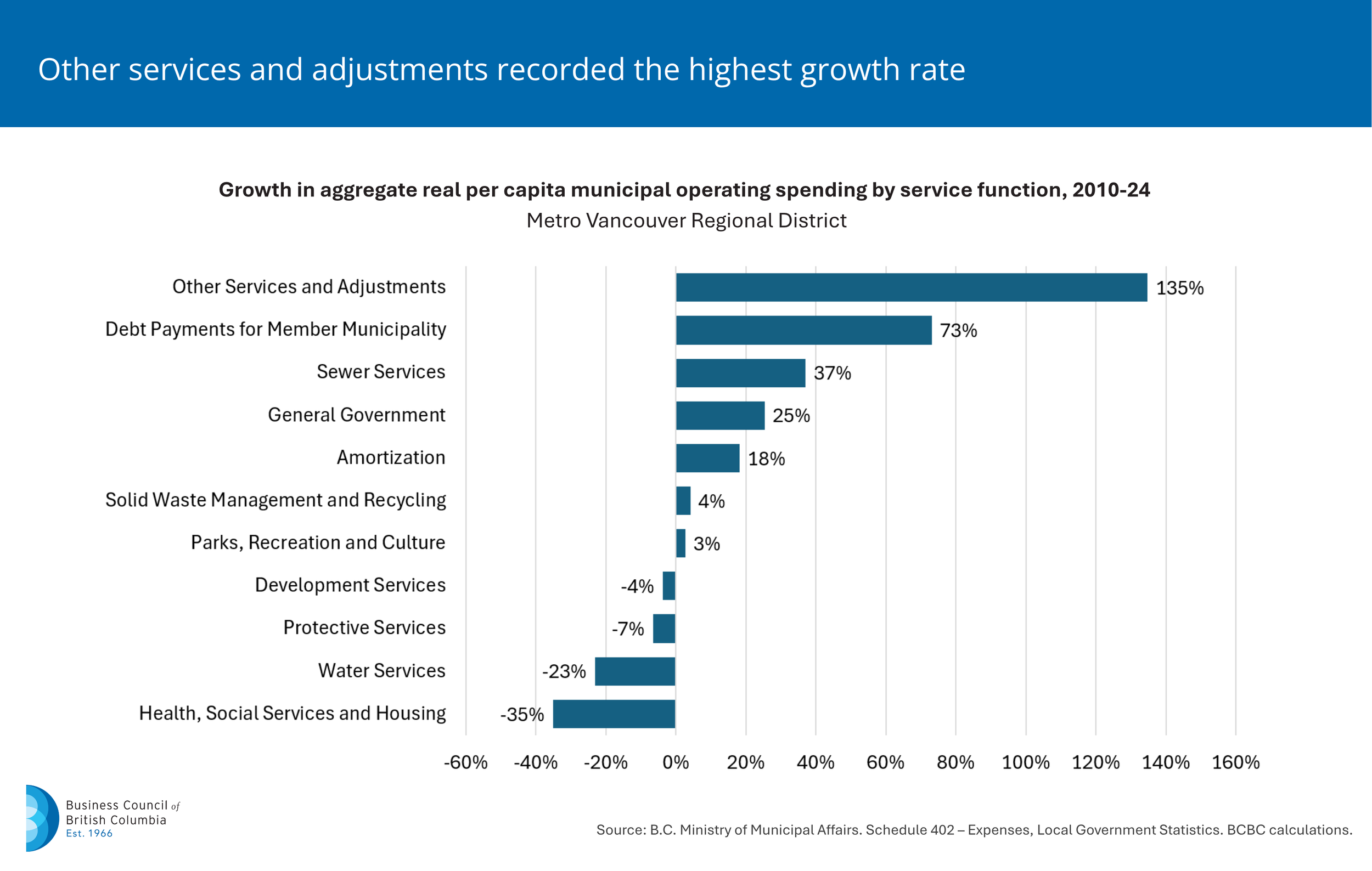
In B.C.'s largest regional district, Metro Vancouver, nominal operating spending grew by 97% over 2010–24, far outpacing regional population growth (31%) and inflation (36%). Total excess spending over the period was approximately $172 million, or $56 per capita (in addition to the excess spending by municipalities).
To prevent further deterioration in affordability in B.C., we recommend municipal governments anchor their operating spending growth to population and inflation. Where proposed increases are above that benchmark, the province should require councils to provide residents with clear justifications tied to measurable service improvements or specific local costs.
We also recommend the province government re-establish independent provincial oversight by expanding the role of the B.C. Auditor General to include municipalities and regional districts. The province should also review and reform Metro Vancouver's governance and internal audit functions.