What Is Happening in B.C.'s Youth Labour Market?
Introduction
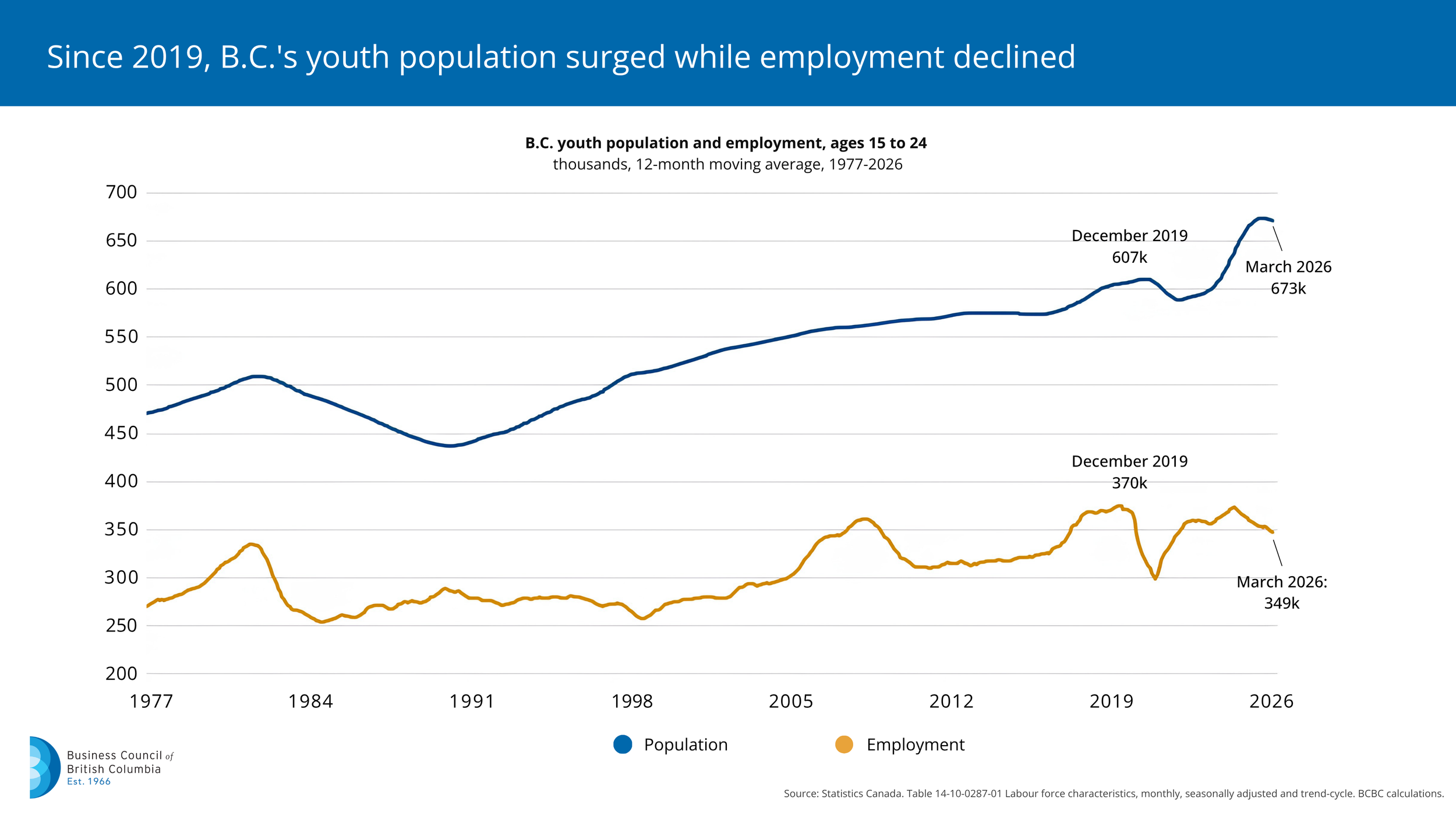
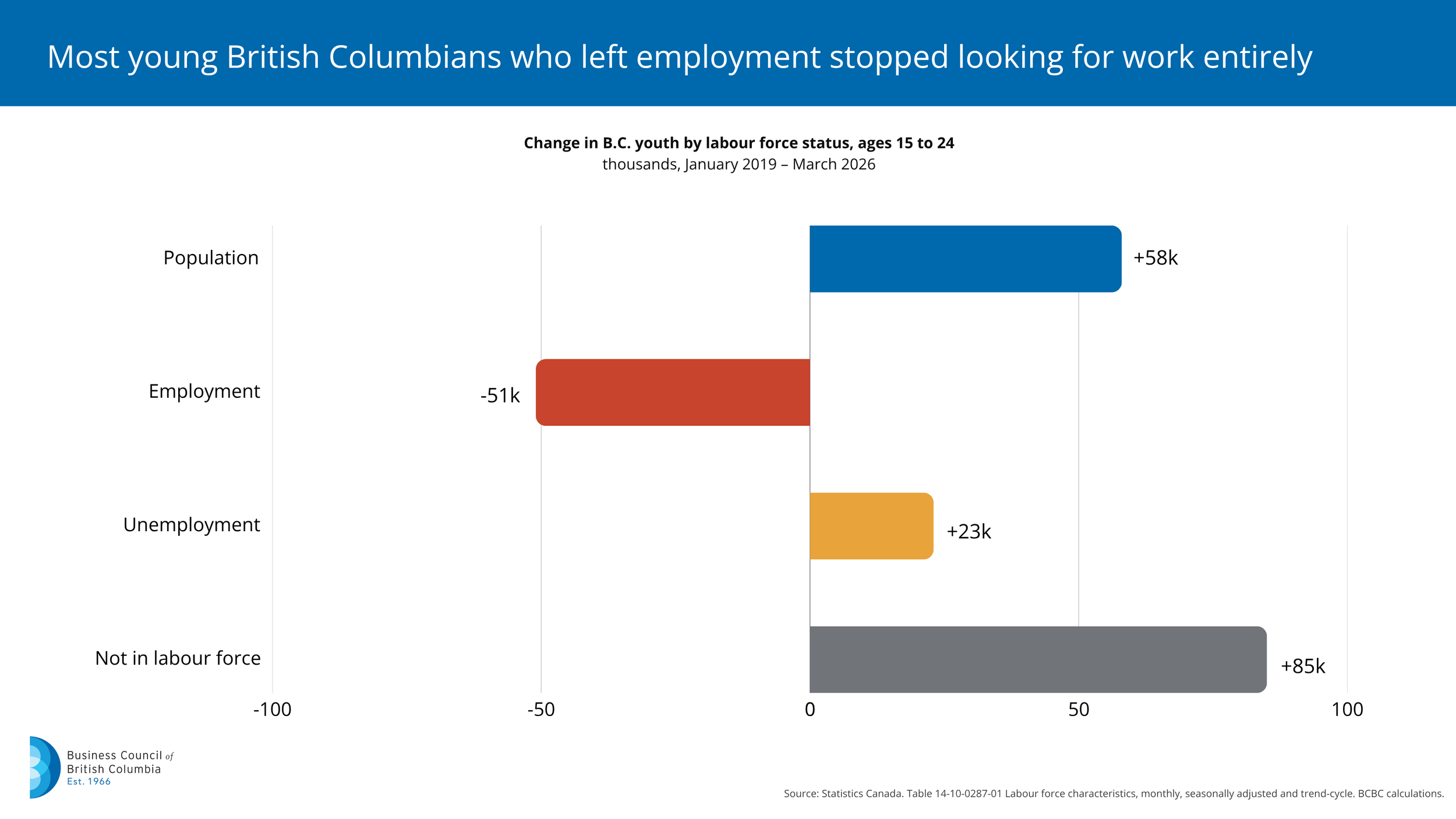
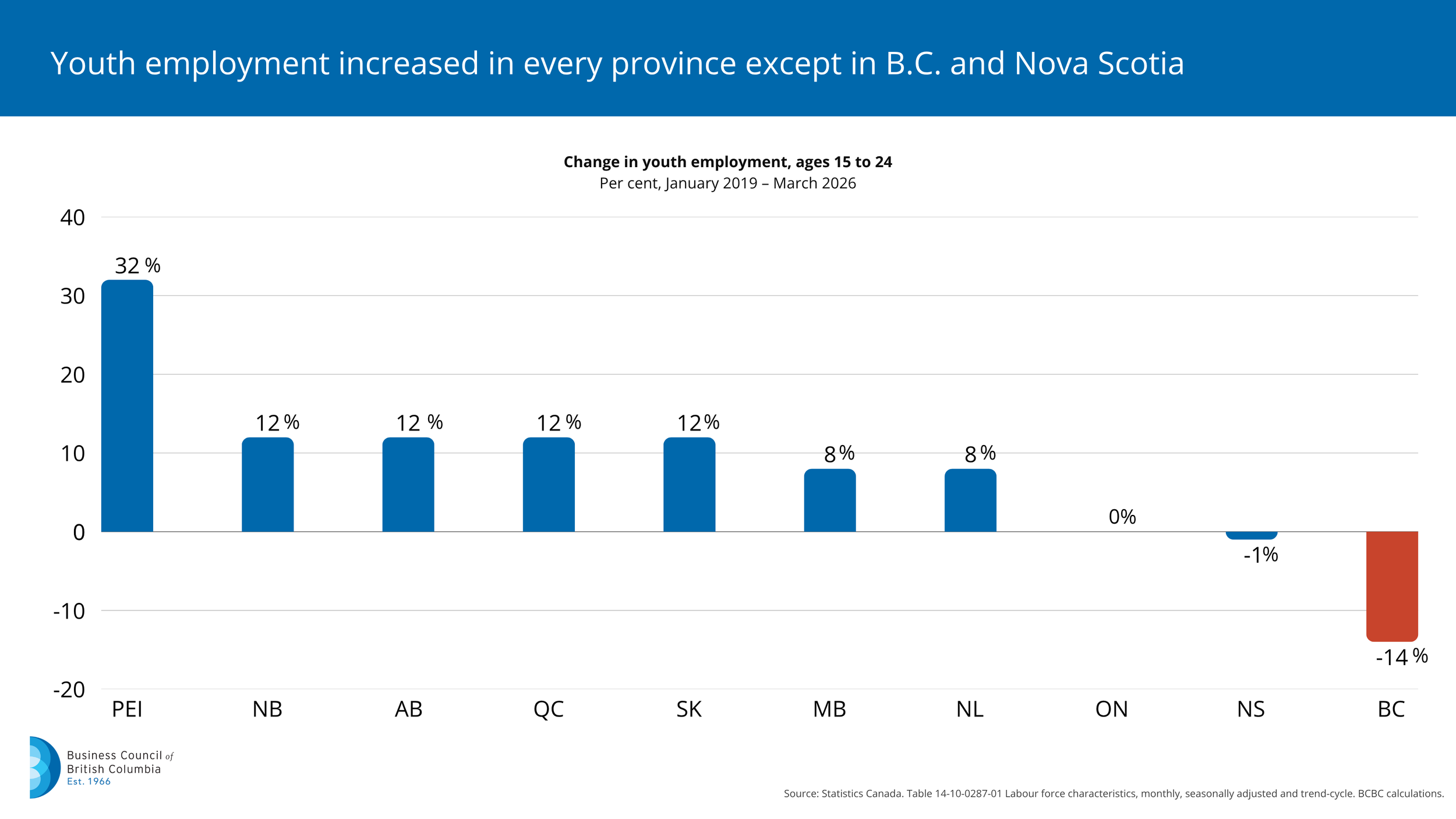
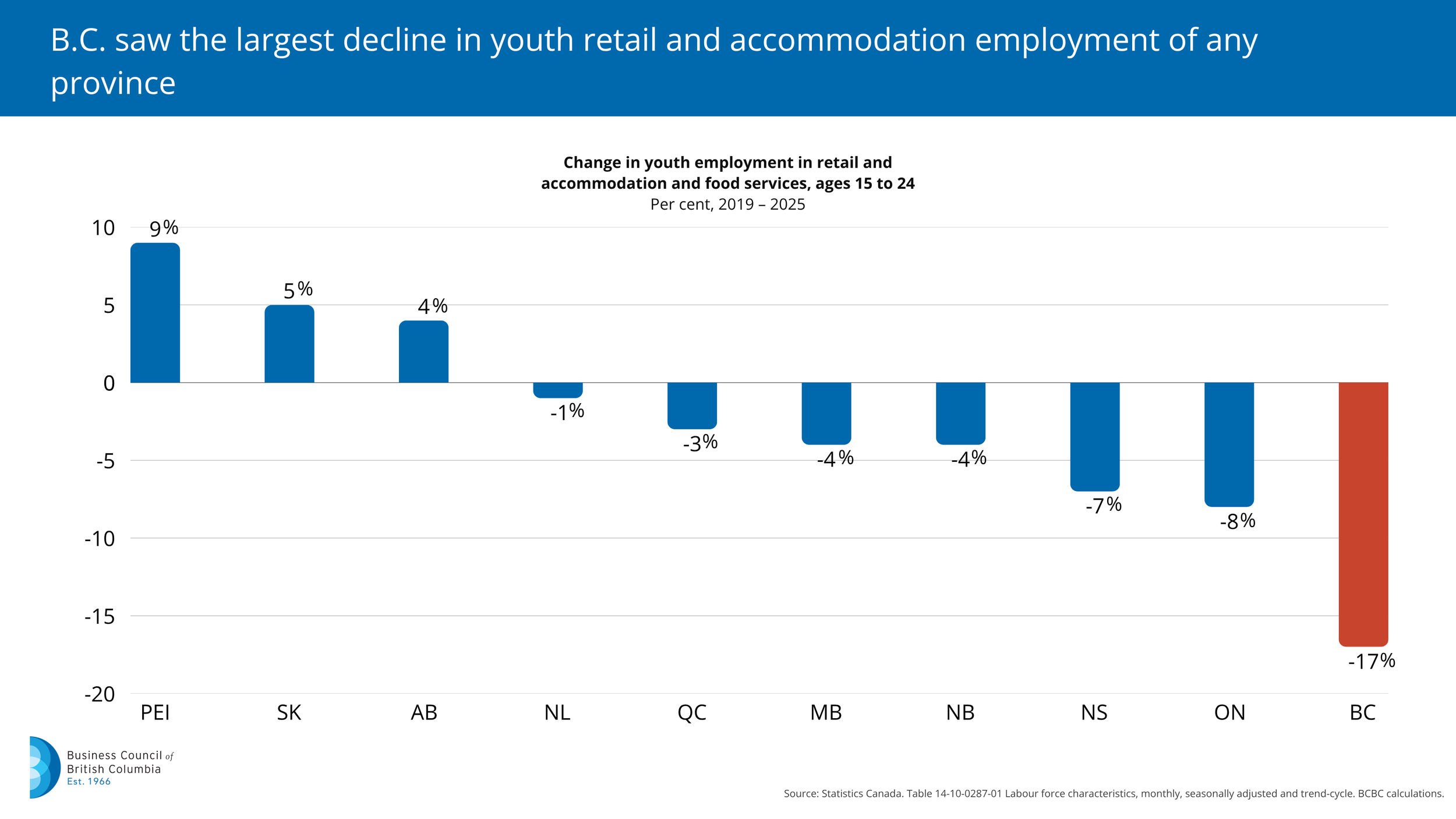
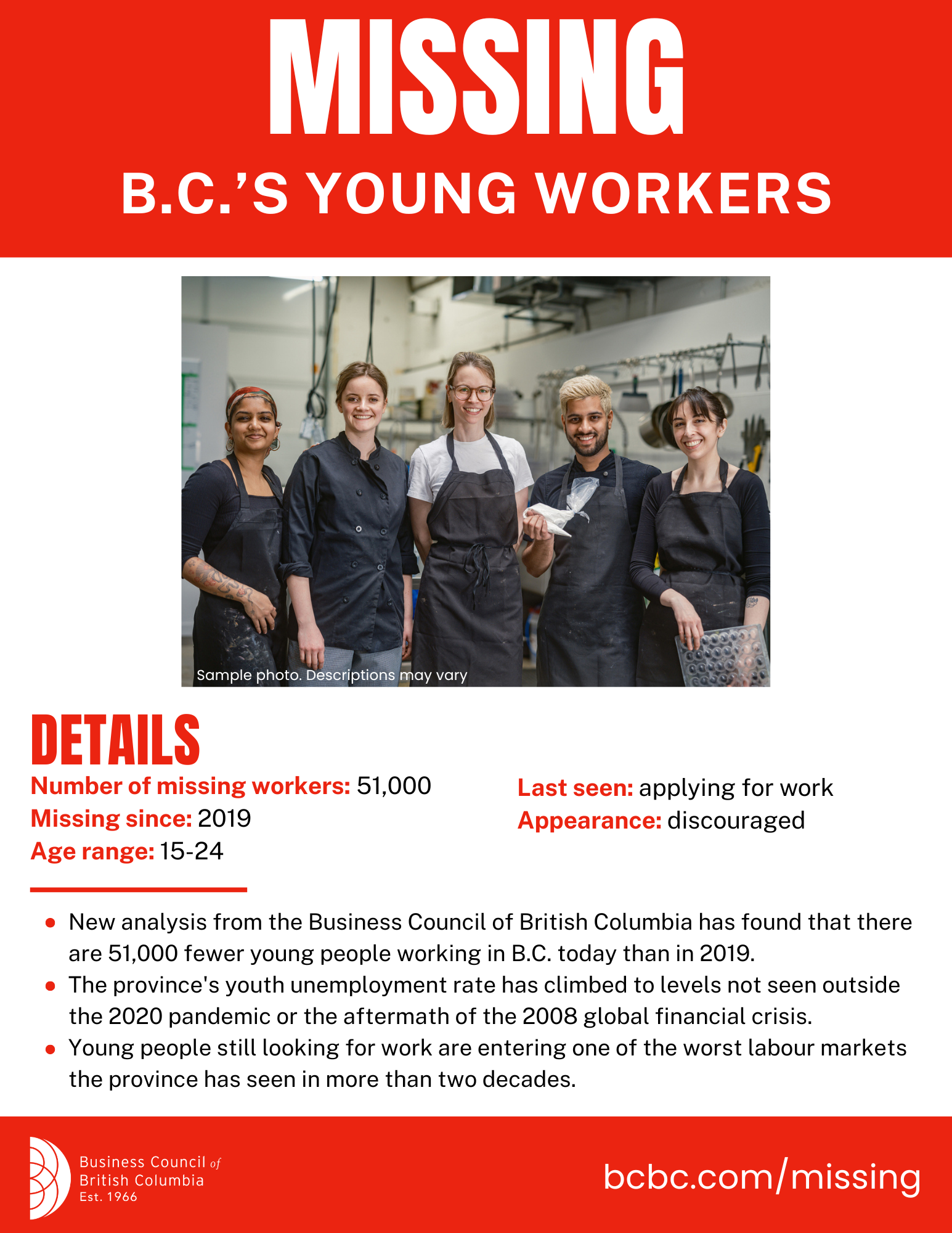
British Columbia's youth labour market has deteriorated in the last seven years. Since 2019, the province has seen fewer young people working, more young people unable to find jobs, and a growing number who have stopped looking altogether.
This should concern anyone who is young, has children, or employs young people. A first job is where young people start building the experience and skills they need to have a successful life. When tens of thousands of young British Columbians are not getting that start, the province loses future workers, taxpayers, and economic growth.
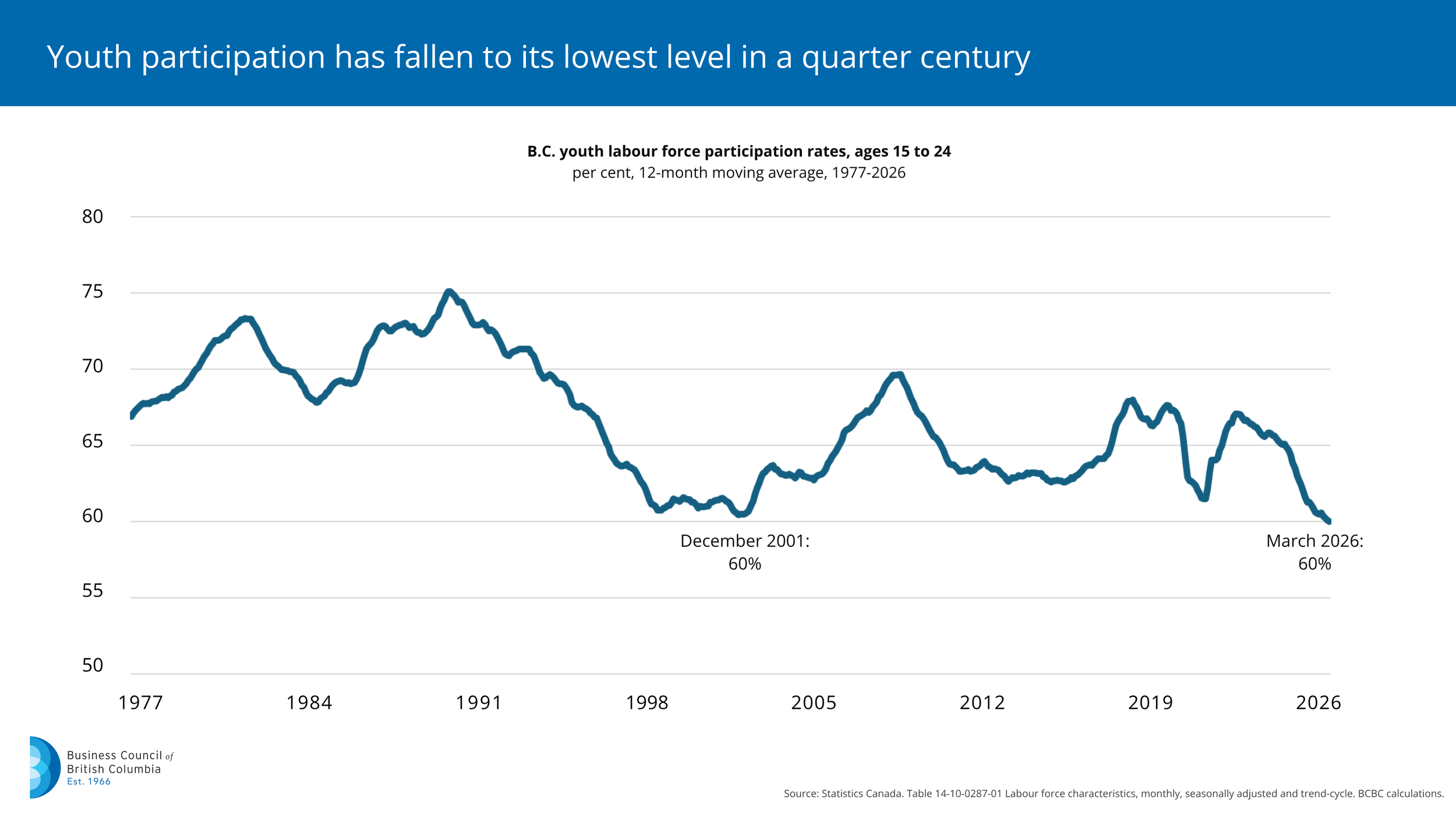
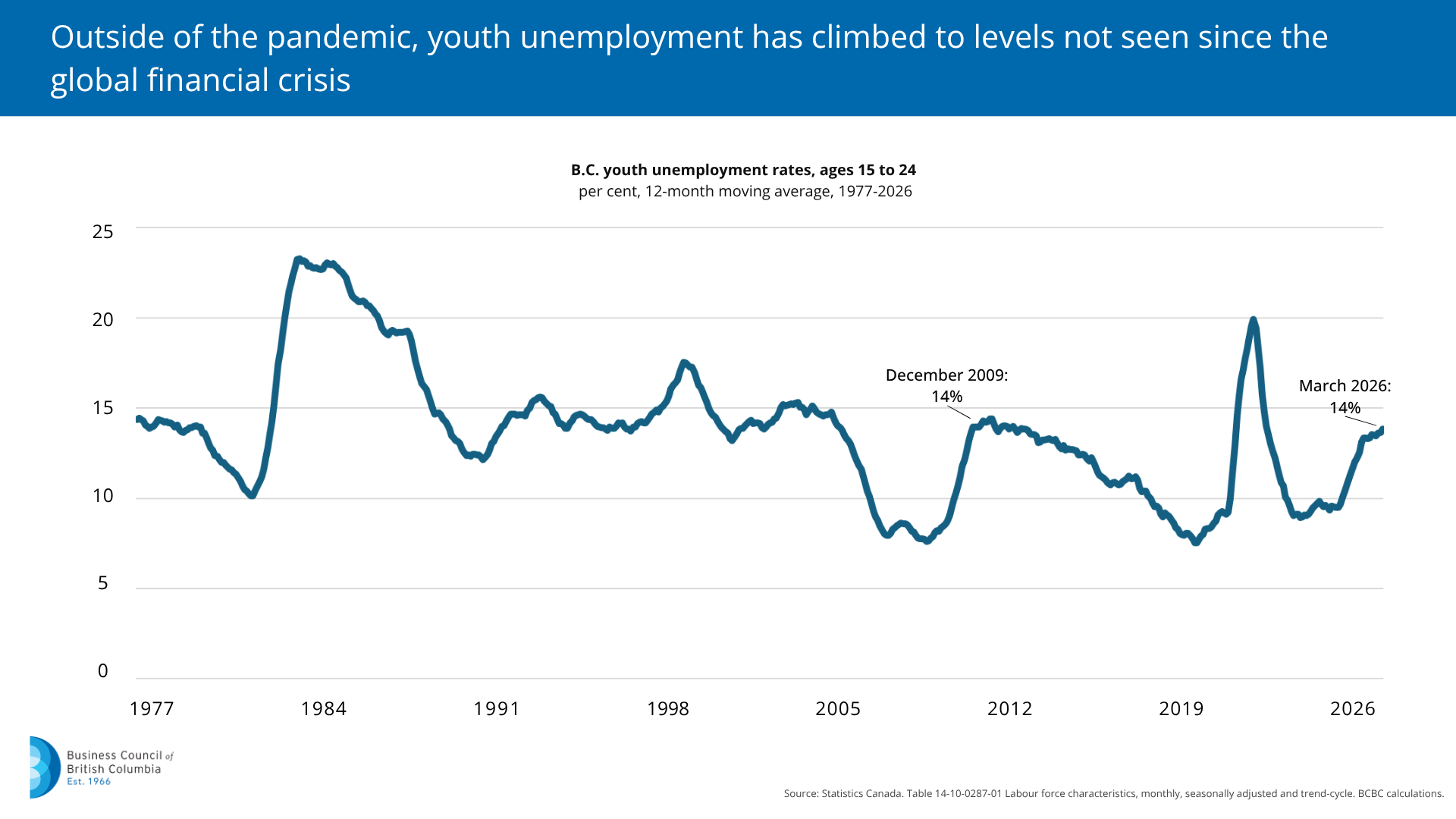
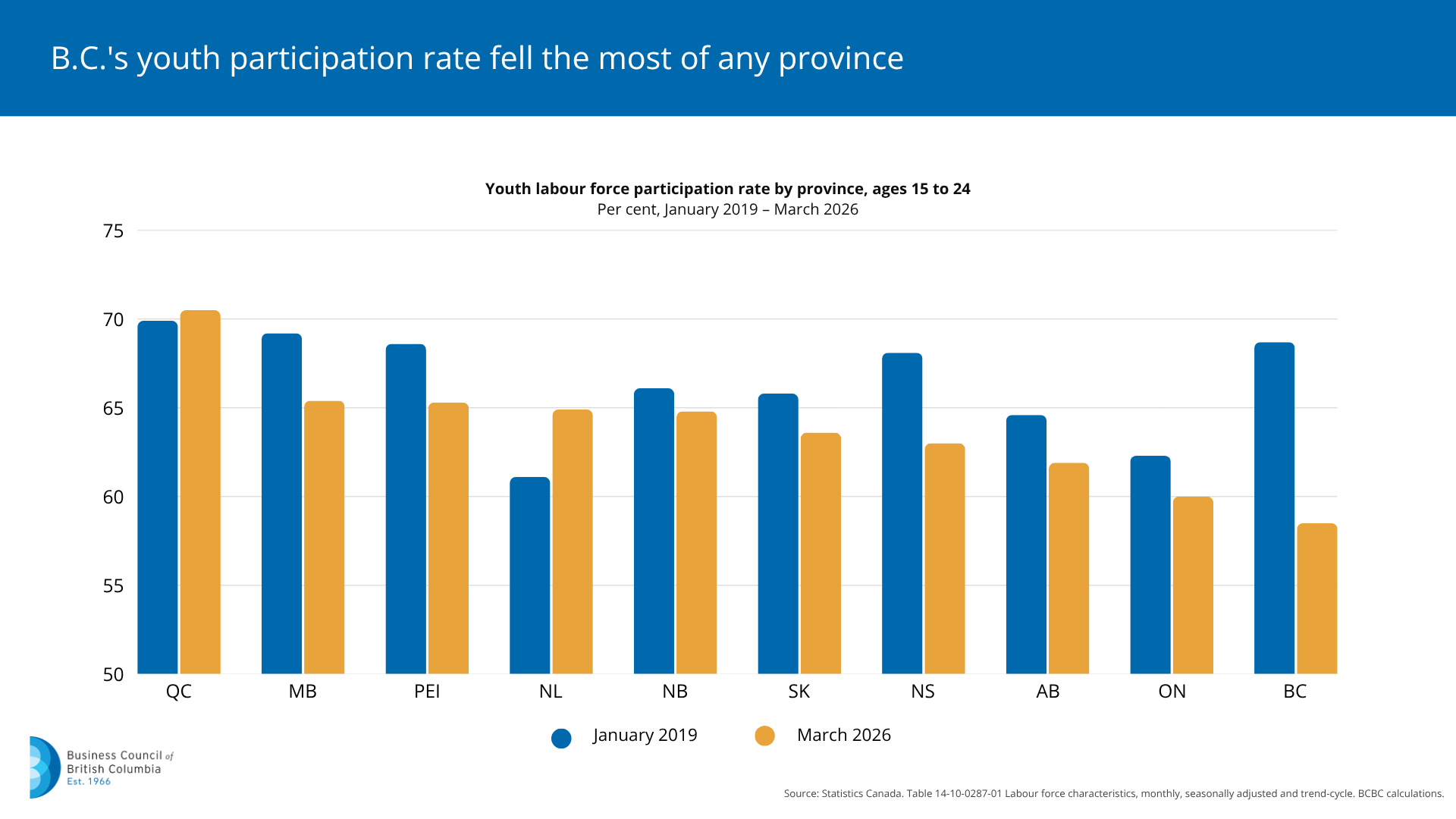
The province's youth unemployment rate has risen to levels not seen outside of the pandemic since the global financial crisis. But the headline unemployment number actually understates the problem because it misses the young people who have given up looking for a job. The share of young people in the province either working or actively looking for work (i.e., participating in the labour market) has fallen to its lowest level in a quarter century. This combination of high youth unemployment and low youth participation has only been seen three times before: during the late 1990s and early 2000s, the aftermath of the global financial crisis, and the pandemic.
This analysis gives an overview of what has been happening and why. The findings reinforce the broader point that when private sector hiring is weak, young workers are the first to pay the price. Creating the conditions for businesses to invest and hire is the most direct path to turning this around.